Key takeaways
- A strong LinkedIn marketing strategy starts with clear goals, audience research, an optimized Company Page, and a content plan built around what your audience actually wants.
- The LinkedIn algorithm in 2026 prioritizes meaningful conversation, original expertise, and video content over surface-level engagement.
- Enterprise teams can scale LinkedIn marketing by combining employee advocacy, thought leadership ads, and tools like Hootsuite to manage publishing, analytics, and engagement from one dashboard.
- LinkedIn’s upgraded ad tools, including BrandLink, Accelerate campaigns, and Media Planner, give marketers stronger forecasting and performance across the funnel.
What is LinkedIn marketing?
LinkedIn marketing is the practice of using LinkedIn to build brand awareness, generate leads, develop relationships, and establish thought leadership with a professional audience. It covers both organic activity (like Company Page posts and employee content) and paid promotion (like Sponsored Content and Thought Leader ads).
What sets LinkedIn apart is the context. People show up there in a professional mindset, ready to learn, network, and make business decisions. That makes it very different from platforms built around entertainment or keeping up with friends.
It’s also where business gets done. LinkedIn is the top platform for B2B marketing, thanks to its strength in lead development and relationship building. For marketers, that means direct access to decision-makers in a setting where professional content is welcome.
Why use LinkedIn for marketing?
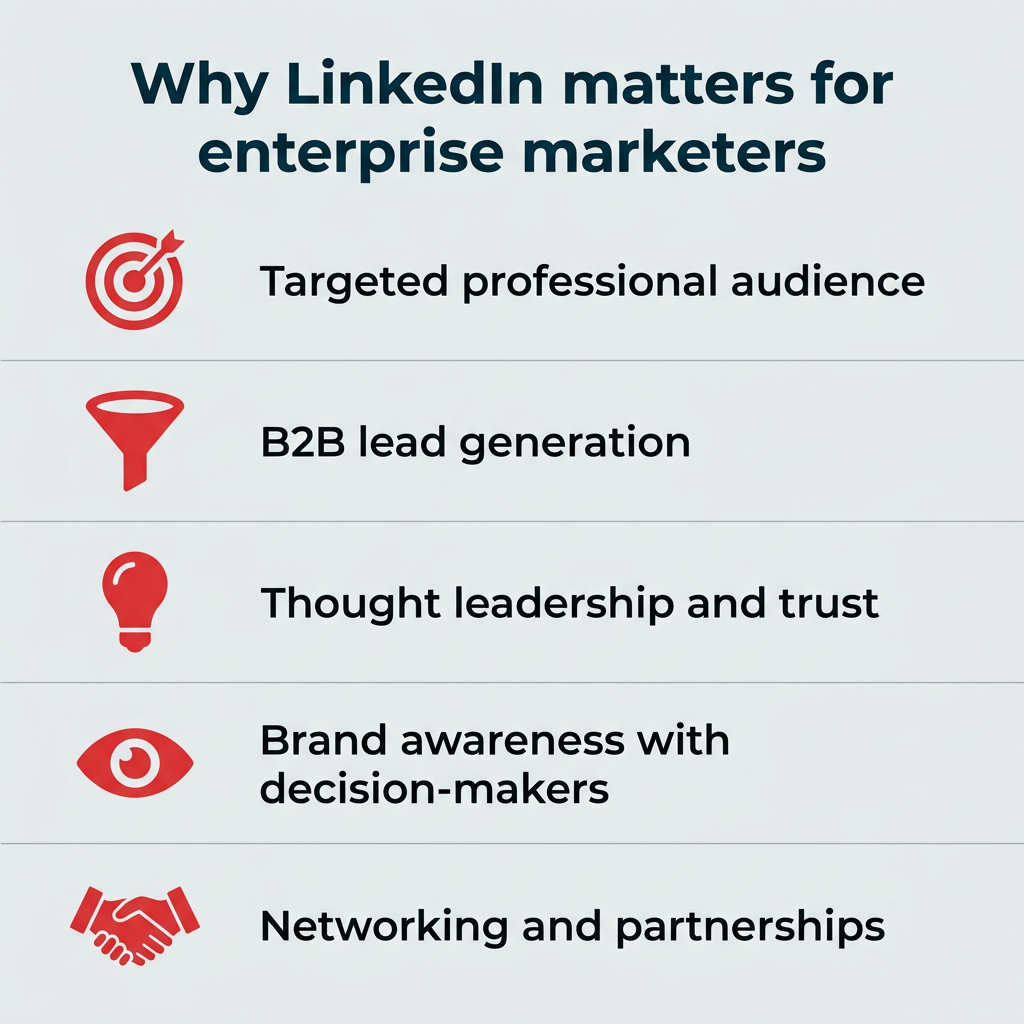
LinkedIn is worth investing in because it gives you direct access to a professional audience that’s hard to reach anywhere else. Here are the key benefits for enterprise marketers:
- A targeted professional audience: LinkedIn lets you reach decision-makers by job title, industry, company, seniority, and skills. Few platforms offer this level of professional targeting.
- B2B lead generation: As the leading channel for B2B marketing, LinkedIn is built for moving prospects through the funnel and capturing high-quality leads.
- Thought leadership and trust: Sharing real expertise helps your brand and your leaders build authority and trust with buyers who research before they purchase.
- Brand awareness among decision-makers: Consistent, valuable content keeps your brand top of mind with the people who control budgets.
- Networking and partnerships: LinkedIn makes it easy to build relationships with peers, partners, creators, and potential collaborators.
In short, LinkedIn is the rare platform where professional content, business intent, and decision-maker access all come together.
How does the LinkedIn algorithm work in 2026?
The LinkedIn algorithm decides which posts to surface based on how much real value and conversation they create, not just how many likes they collect. Understanding what it rewards (and what it penalizes) helps you create content that actually reaches your audience.
LinkedIn has also rolled out new AI systems that scan every post before it hits the feed, and they’re serious about quality.
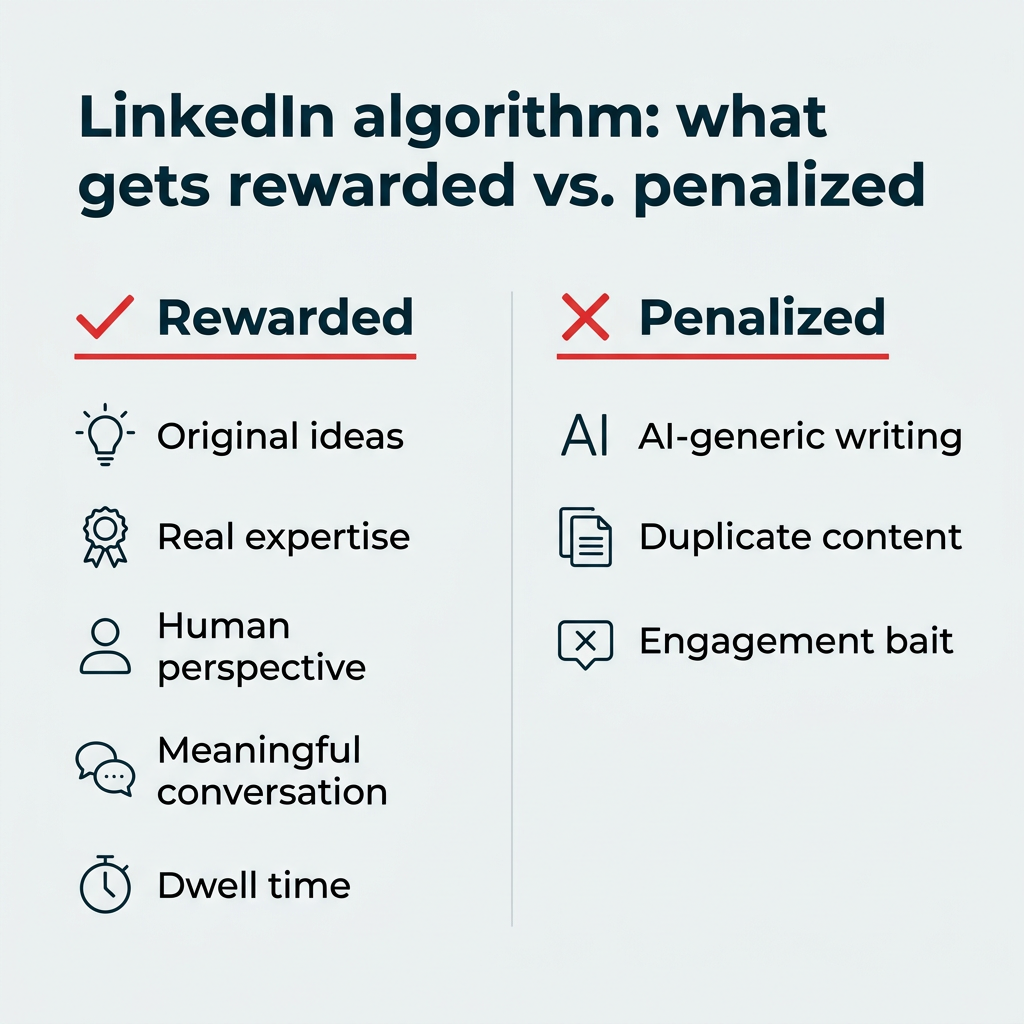
Here’s what the algorithm rewards:
- Original ideas: Fresh perspectives and unique points of view.
- Real expertise: Content that demonstrates genuine knowledge.
- Actual human perspective: Posts that sound like a person, not a template.
- Meaningful conversation: Posts that spark thoughtful, back-and-forth discussion.
- Dwell time: People who read your full post or watch your whole video help push your content further.
And here’s what it penalizes:
- AI-generic writing: Low-effort posts that read like they were generated in seconds with no point of view.
- Duplicate or plagiarized content: Anything flagged as copied or unoriginal.
- Engagement bait: Posts chasing quick reactions rather than real discussion.
When you publish, LinkedIn tests your post with a small initial audience. If it earns meaningful engagement, it gets shown to a broader feed. The takeaway: the more you tap into real stories, data, and expertise, the better your content will perform. For a deeper breakdown, see our guide to the LinkedIn algorithm.
What’s new in LinkedIn marketing in 2026?
In 2026, LinkedIn has doubled down on video, AI, and smarter ad tools, with ad revenue projected to reach $9.7 billion. Let’s dive in:
Why is short-form video dominating LinkedIn?
Last year, LinkedIn started experimenting with a TikTok-like video feed in its app. And that experiment seems to be paying off.
Video viewership on LinkedIn has grown 36% year-over-year, and video creation is now growing 2x faster than all other post types.
To keep up with all that momentum, LinkedIn rolled out a bunch of new video features, including:
- A “Videos For You” section in your feed, packed with personalized video recommendations you can scroll through horizontally
- A full-screen video mode on mobile — just tap a video and it opens an immersive, full-screen player
- A CapCut integration, so you can edit in CapCut and send your videos straight to LinkedIn
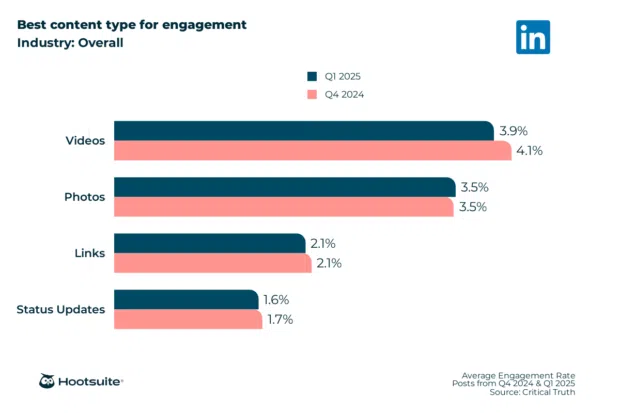
Hootsuite’s own data shows that video content has the highest rate of engagement among content types on LinkedIn.
And LinkedIn is just getting started: they’re planning to show even more videos in search results.
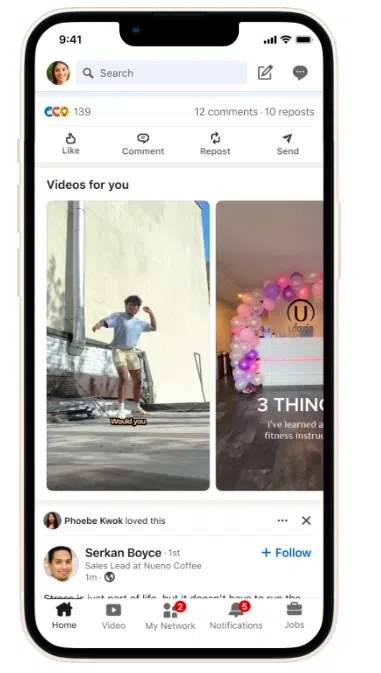
Source: LinkedIn
What is BrandLink?
LinkedIn’s Wire Program has officially been renamed and expanded into BrandLink.
With BrandLink, marketers can place in-stream video ads right before:
- Trusted publisher content (think: Forbes and Business Insider)
- Top creator videos from names like Steven Bartlett, Rebecca Minkoff, Gary Vaynerchuk, and more
Creators now get a cut of the ad revenue (cut unknown), marking LinkedIn’s first real step toward creator monetization.
And the early performance? Pretty impressive:
- Viewers are up to 18% more likely to become a lead
- 130% higher video completion rate than standard video ads
- 23% higher view rate
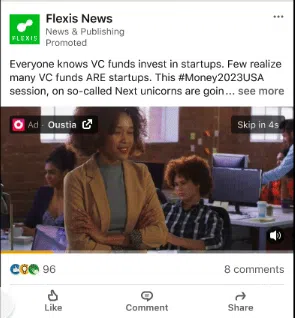
Source: LinkedIn
What new Campaign Manager features are available?
LinkedIn has rolled out a suite of upgrades to help marketers plan, optimize, and measure performance more effectively. These features include:
- Marketing Overview: A full account-level snapshot across campaigns.
- Media Planner: This new tool helps forecast reach, impressions, and average frequency, so you can estimate ROI before you launch an individual ad campaign. You can tinker with factors like targeting and budget to see how they should impact your results.
- Ads Duplication: Quickly duplicate or test variations of high-performing ads.
- Dynamic UTMs: An automated tool for generating consistent UTMs across campaigns.
- Measurement Insights: A new Insights dashboard that provides deeper, journey-level analytics.
- Campaign Performance Digest: AI-powered, actionable insights and benchmarks.
What’s new with LinkedIn Live Event ads and Accelerate ads?
LinkedIn has expanded capabilities for both Live Event ads and Accelerate campaigns. Here’s what’s new for each:
Live Event ads: Brands can now use Thought Leader ads to promote a member’s post about an event and link directly to the event, use a live 30-second sneak-peek video ad during and after the event, and regionally target their event ads.
Accelerate ads: LinkedIn began testing Accelerate AI-powered campaigns in 2023 and has since made them generally available for objectives like lead generation and website visits. They’ve continued adding more functionality, including the ability to add video and document ads, rather than only single-image creative. They’ve also expanded the available objectives to include brand awareness, engagement, website conversions, and video views.
How to build a LinkedIn marketing strategy
A smart LinkedIn marketing strategy starts with clear goals, a deep understanding of your audience, a strong presence, valuable content, and ongoing optimization. Here’s a quick overview of the steps:
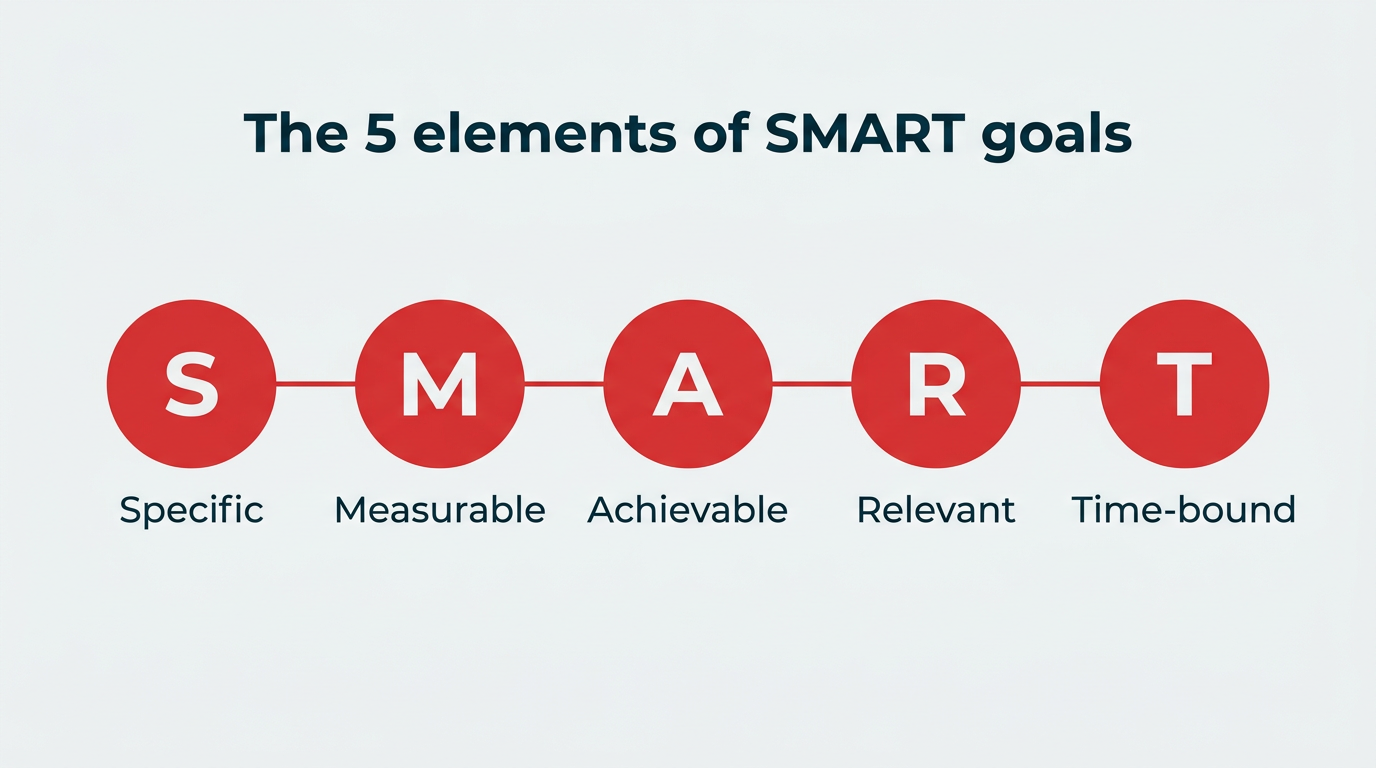
- Set specific goals based on the right metrics
- Research your target audience
- Optimize your Company Page and executive profiles
- Develop your content strategy
- Analyze and refine your results
How do you set specific goals for LinkedIn marketing?
Take a moment to think about the bigger (marketing) picture. What do you want this platform to do for your brand? How will LinkedIn fit into your overall marketing strategy? What specific goals do you want to reach?
On other social platforms, people focus on entertainment and keeping up with friends. But LinkedIn is primarily a professional and business-oriented platform, which makes it especially strong for lead development and relationship building.
For B2C companies, LinkedIn might serve primarily as a recruiting platform. Only you and your team can decide what makes the most sense for you.
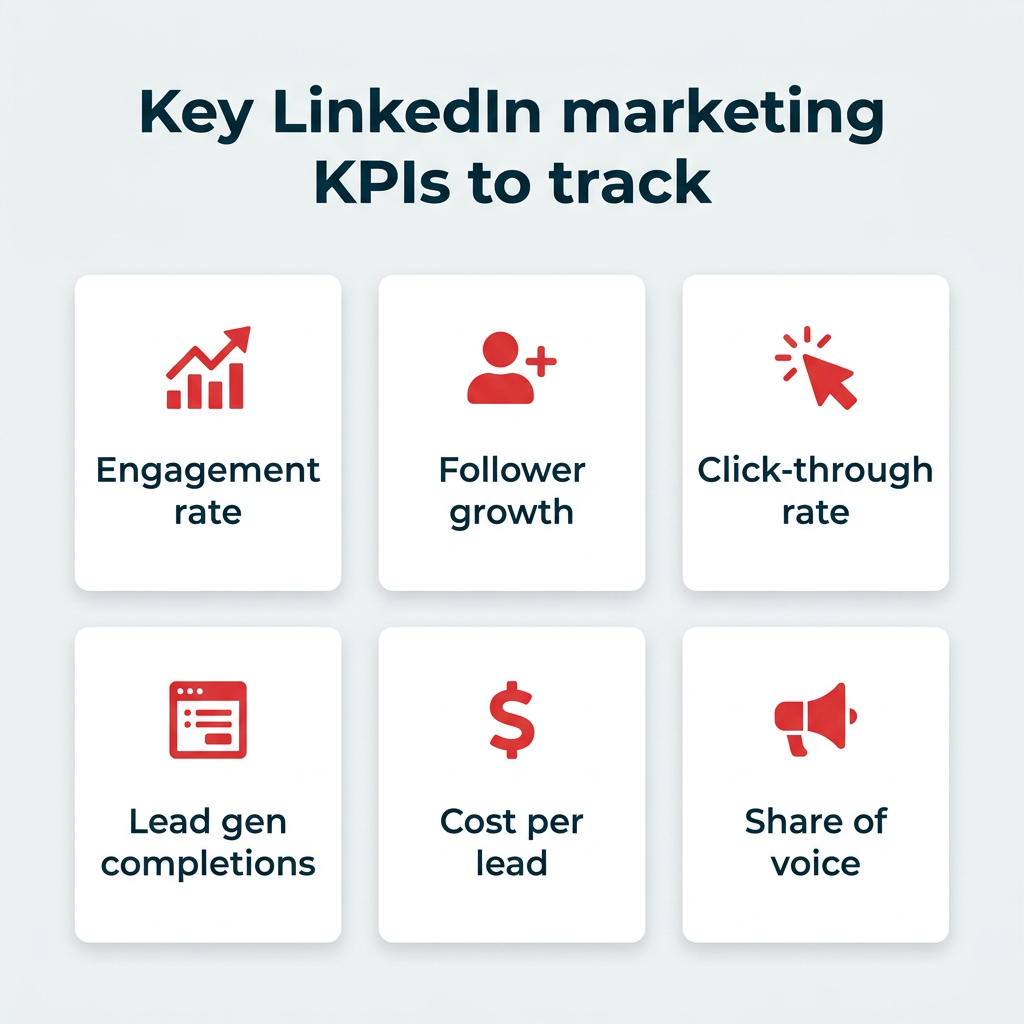
Once you know your goals, translate them into specific KPIs. Common LinkedIn KPIs include:
- Engagement rate: How actively your audience interacts with your content.
- Follower growth rate: How quickly your audience is expanding.
- Click-through rate: How often people click your links or CTAs.
- Lead gen form completions: How many leads your campaigns capture.
- Cost per lead: How efficiently your paid spend converts.
- Share of voice: How visible your brand is compared to competitors.
Don’t know where to start? Check out our blog post on how to set goals for social media marketing. Once you set your goals, craft specific LinkedIn KPIs to keep things on track.
How do you research your LinkedIn target audience?
LinkedIn’s demographics look a little different from what you’ll find on other platforms. Users tend to skew older and have a higher income.
But that’s just a starting point. What really matters is understanding your audience and what they actually want from you on LinkedIn.
LinkedIn analytics are a good way to find the demographics specific to your audience. Within your Visitor and Follower dashboards, you can see what industries your followers are in, their job functions, seniority, location, and company size.
You can also use Audience Insights within Campaign Manager to research your target audience. AI-powered buyer groups can help you identify the most important decision-makers for your products.
Or, you can choose your own audience characteristics. Then the tool provides insights including what types of content your audience is interested in.
From there, social listening can take your understanding to the next level. It helps you tap into how people are feeling about your brand, your competitors, and your industry.
Finally, don’t sleep on AI tools. For example, try feeding ChatGPT sample posts or comments from your ideal target audience. Add a description of who you’re trying to reach. Then drill down into needs, preferences, pain points, and so on.
LinkedIn research shows that 38% of sellers that use AI to research leads and companies save over 1.5 hours per week.
How do you optimize your LinkedIn Company Page and executive profiles?
LinkedIn data shows that complete Pages get 30% more weekly views.
No matter what goals you’re working towards, make sure your LinkedIn Company Page is fully filled out with all the tabs and sections available to you. A complete, active Page is one of the simplest ways to grow your brand on LinkedIn.
For larger organizations, Showcase Pages can help keep your content marketing focused on the right audience. Try setting them up for different initiatives or programs within your company.
And whatever you do, don’t let your main Page sit untouched for months at a time. LinkedIn recommends updating your cover image at least twice a year, which is an easy cue to give your Page a quick refresh.
Your executive team’s profiles deserve the same love. We’ll dig into the why a bit later, but for now, make sure each exec’s profile feels complete: strong profile and background images, a clear headline, and a summary that actually sounds like a human.
Don’t forget to complete the summary section! This is an important resource for sharing your leaders’ passion, expertise, and experience. It’s a powerful tool to explain why people should follow your exec team.
How do you develop a LinkedIn content strategy?
LinkedIn is, at its core, a place for connection. People show up there to learn, share ideas, and build relationships, so your content should feel like part of that ecosystem.
A good rule of thumb is to keep a healthy content mix. The 4-1-1 rule is a simple framework: for every 6 pieces of content, share 4 pieces of relevant content from others, 1 soft promotional post, and 1 hard promotional post. Just be sure to add your own perspective to everything you share.
It also helps to vary your formats.
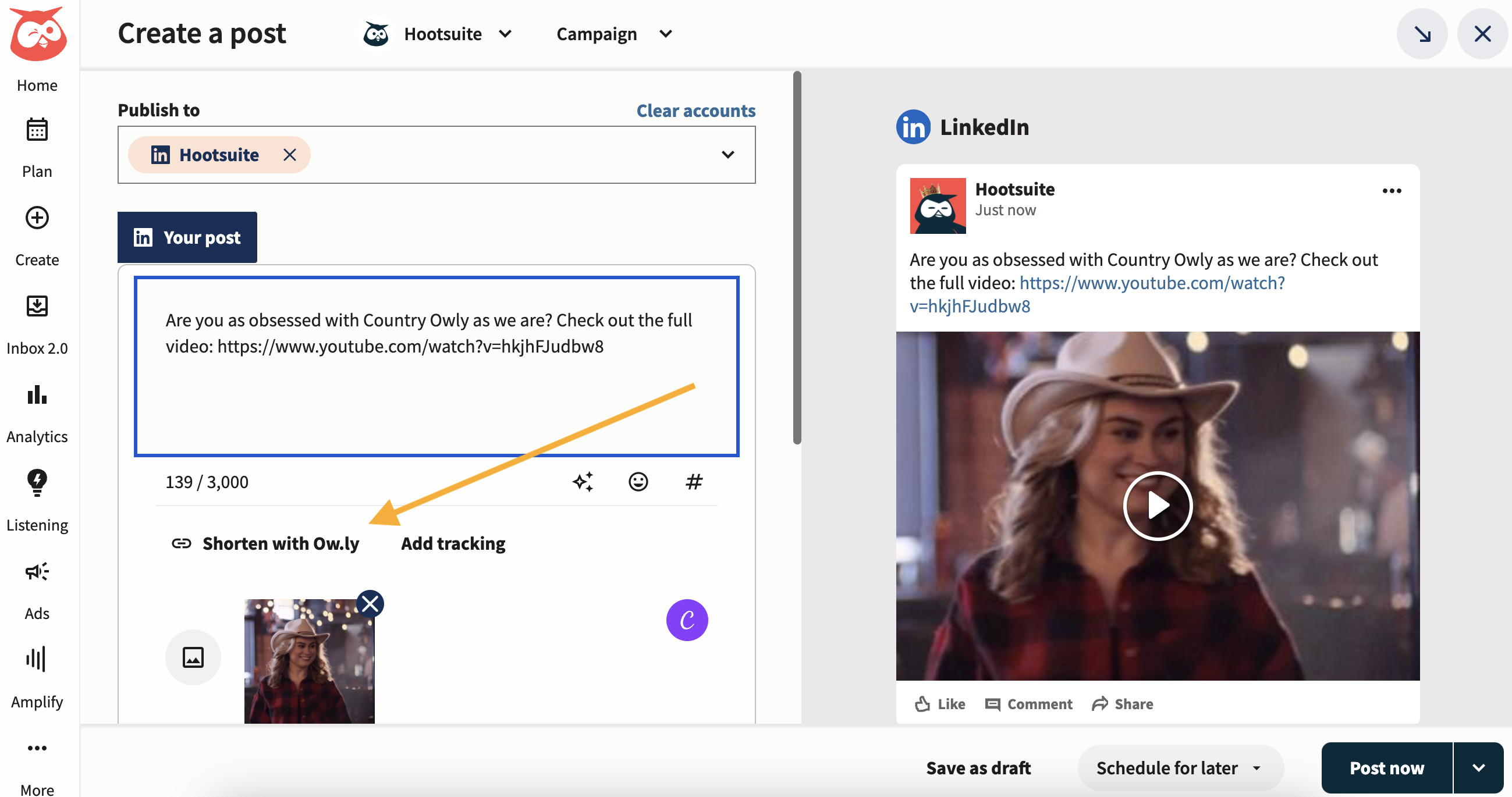
Here are the LinkedIn content types that perform well in 2026:
- Short-form video: The fastest-growing and highest-engagement format on the platform.
- Carousels and document posts: Swipeable, value-packed content that holds attention.
- Text-only posts: Quick, off-the-cuff updates that spark conversation.
- LinkedIn newsletters: A way to build a subscribed audience around your expertise.
- LinkedIn articles: Long-form content for deeper thought leadership.
- Polls: A low-effort way to drive engagement and gather audience insights.
When you’re creating content for LinkedIn, keep these best practices in mind:
- Use eye-catching visuals to help your posts stand out.
- Share relevant content, including industry trends, news, or timely insights.
- Give a quick recap of a campaign you ran or a lesson you recently learned.
- Use hashtags strategically to reach the right people or group related posts.
- Add SEO-friendly titles, descriptions, and tags so more users can find your content.
- Spotlight and celebrate your team. People love seeing the real humans behind a brand.
“Don’t be afraid to test new formats,” says Trish Riswick, Team Lead, Social Marketing at Hootsuite.
“Try polls, short videos, carousels, and branded memes. The algorithm rewards experimentation and activity and so does your audience.”
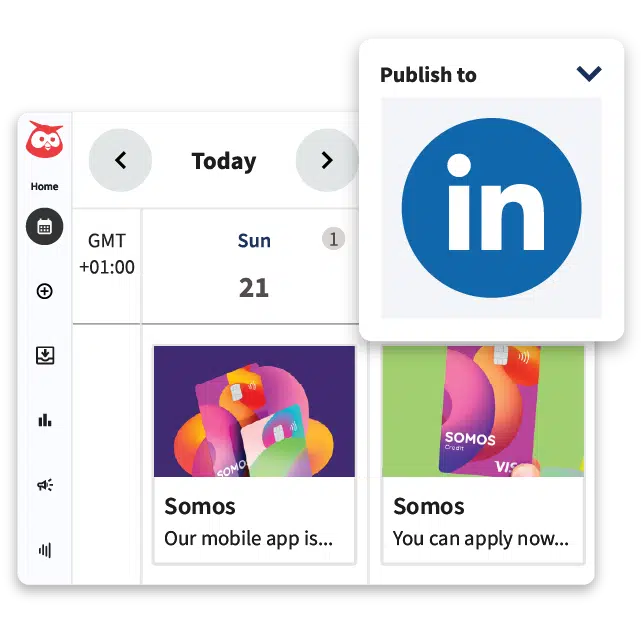
#1 for LinkedIn marketing
Schedule posts, answer messages, and manage ads from one spot. Then, show off your results in beautiful reports. It’s so easy.
How do you analyze and refine LinkedIn marketing results?
Rome wasn’t built in a day, and the same goes for your LinkedIn strategy. The smartest LinkedIn strategies evolve. Tracking how your content performs helps you double-click on what’s working, and fix what’s not.
Start with LinkedIn’s native analytics for a solid read on your Page and post performance. It gives you a clear overview of what your specific audience is responding to.
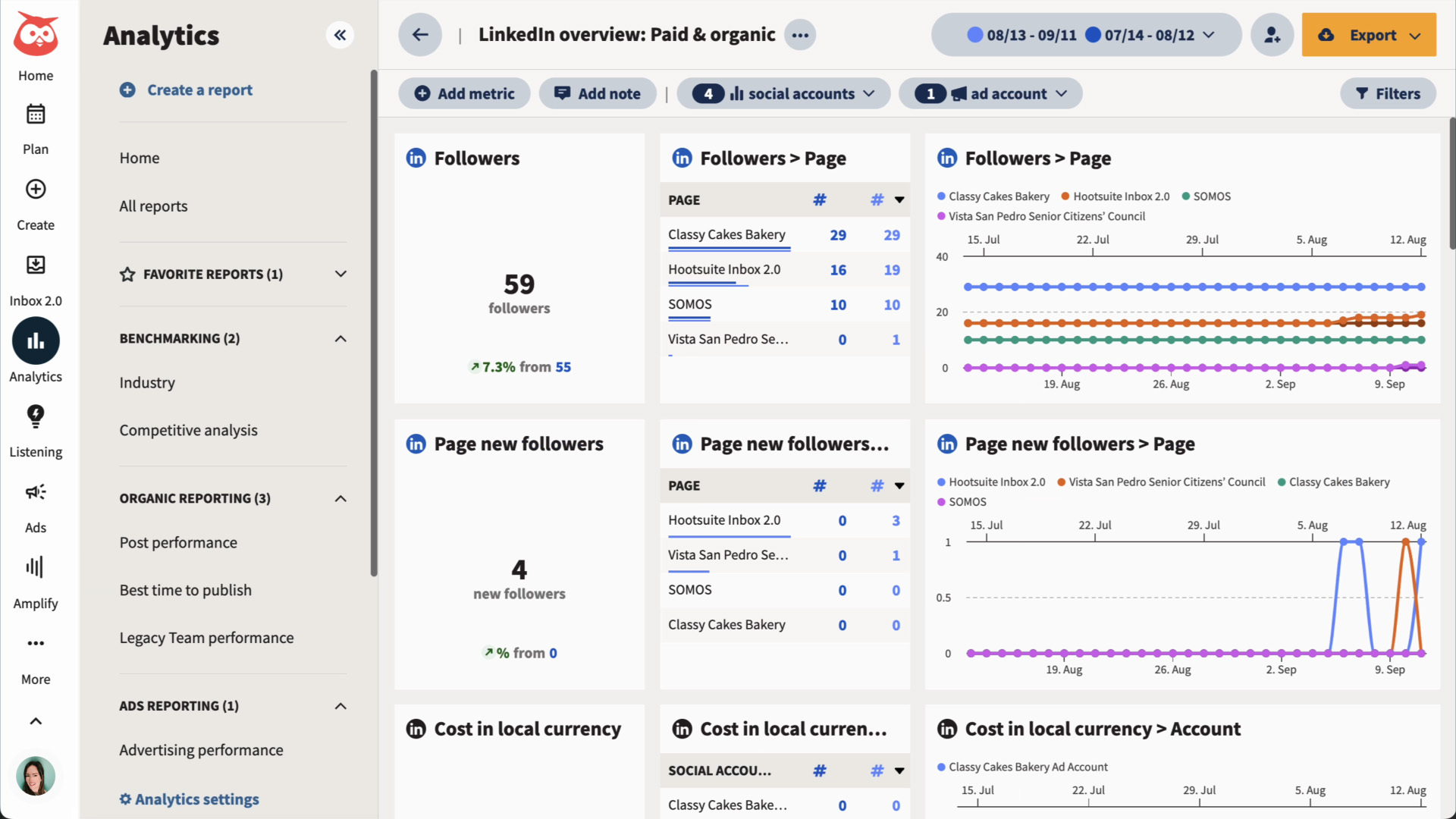
If you want a deeper layer of detail, Hootsuite’s LinkedIn analytics can show how your content fits into your larger social strategy and how it stacks up against your other channels.
To keep your reporting focused, map each metric to a business goal:
|
Metric |
What it measures |
Business goal it supports |
|---|---|---|
|
Engagement rate |
How actively your audience interacts with content |
Community building and content resonance |
|
Follower growth |
How fast your audience is expanding |
Brand awareness and reach |
|
Click-through rate |
How often people click your links or CTAs |
Traffic and conversion |
|
Lead gen form completions |
How many leads your campaigns capture |
Lead generation |
|
Profile views |
How many people view your Page or executive profiles |
Visibility and thought leadership |
|
Share of voice |
Your brand’s visibility versus competitors |
Competitive positioning |
|
Referral traffic |
Visits driven from LinkedIn to your site |
Pipeline contribution |
Once you start looking at the numbers, patterns usually show up pretty quickly. If performance starts to drop, look at what changed.
Did you test a new content format? Launch a campaign that didn’t land the way you expected? Was there an algorithm update? Or has engagement slowed because your team hasn’t been as active in the comments or direct messages?
All of these clues help you adjust your approach and stay aligned with what your audience wants. They aren’t just data points. They’re direction.
And don’t forget to share your results. Social media doesn’t live in a vacuum, after all. Bringing your LinkedIn performance to your stakeholders helps build trust in your strategy and makes it easier to secure buy-in for future investment.
LinkedIn marketing best practices for 2026
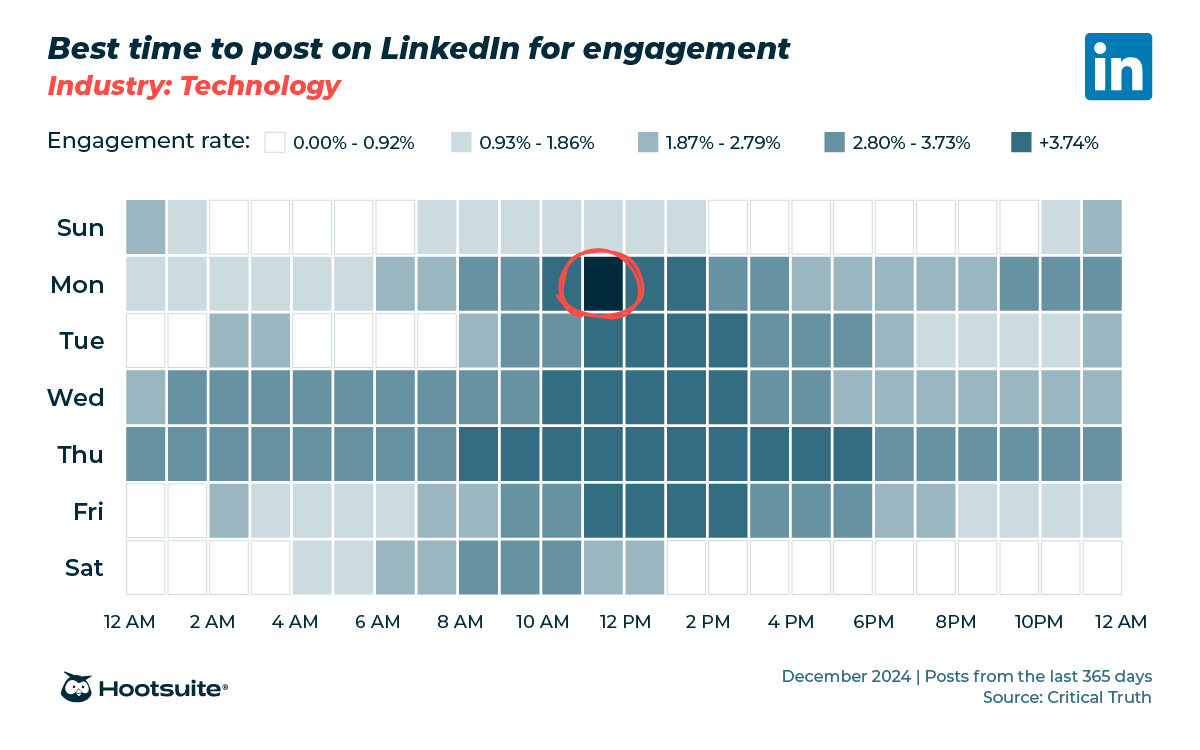
The strongest LinkedIn strategies focus on jumping into real conversations, sharing content that invites engagement, posting at the right moments, and spotlighting the people behind your brand.
Why should you get involved in real conversations on LinkedIn?
LinkedIn used to have a bit of a notice-board feel, full of announcements. But it has evolved into a truly social platform.
“LinkedIn, in many ways, functions like a professional version of Reddit,” says Eileen Kwok, Social & Influencer Marketing Strategist at Hootsuite. “It’s filled with niche discussions, expert insights, and unfiltered conversations happening in the comments.”
All those conversations provide great learning opportunities for both employees and the brand. There are real strategic learnings to be found when you follow leaders and LinkedIn groups within your niche. LinkedIn Groups, in particular, can be a useful place to join industry discussions and build relationships with your target audience.
LinkedIn is also prioritizing meaningful conversation in a big way, so jumping in pays off. What does that look like in practice?
- Posts with thoughtful, back-and-forth comments outperform posts with hundreds of quick emojis
- People who read your full post or watch your whole video help push your content further
- Questions, reflections, and real storytelling earn the most engagement
- Shallow “post and pray” updates don’t go far anymore
The shift is noticeable.
“We’re seeing a shift from passive engagement (likes and reshares) to active participation,” says Kwok. “More users are jumping into the comment section, sparking meaningful discussions, and debating ideas, turning LinkedIn into a true community-driven platform rather than just a feed of corporate updates.”
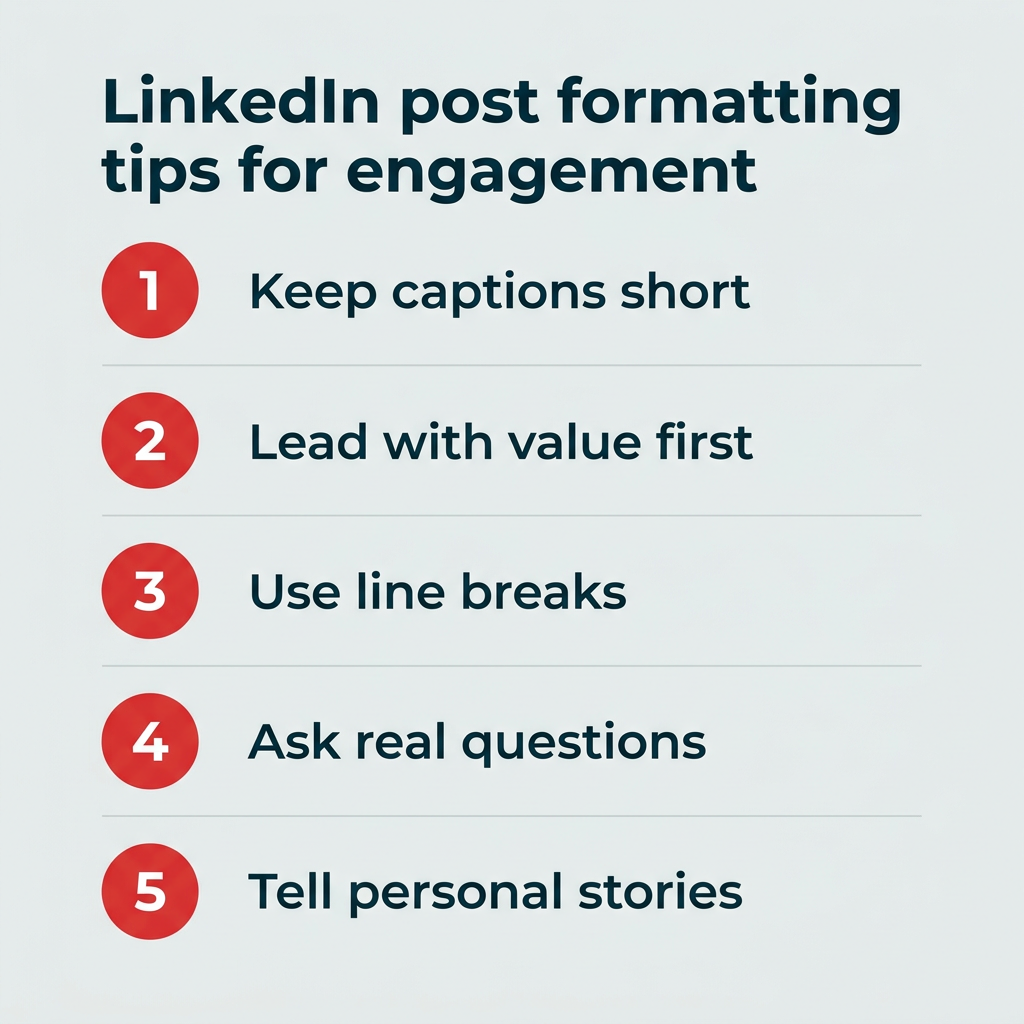
How should you format LinkedIn posts for engagement?
LinkedIn comments increased 37% year-over-year in January 2025. That’s partly because the nature of content on the platform is changing.
“We’re seeing more users treat LinkedIn how users used X back in the day,” says Kwok.
Instead of overly polished, corporate-sounding posts, LinkedIn is getting more human: “More short posts, off-the-cuff posts, and reactive content that makes scrolling more dynamic and fun.”
A few best practices to keep in mind:
- Short is powerful: When you’re linking out, keep your caption brief and let the headline do the heavy lifting.
- Lead with value: Tell people what they’ll get in the first line.
- Use line breaks: Make your post easy to scan by breaking up text into short, digestible chunks.
- Ask questions: Genuine questions spark real conversation.
- Tell stories: Personal experiences and lessons learned resonate more than generic advice.
FAQ: LinkedIn marketing
What is a LinkedIn marketing strategy?
How much does LinkedIn marketing cost?
What types of content work best on LinkedIn?
How often should I post on LinkedIn?
How can enterprise teams scale LinkedIn marketing?
What metrics should I track for LinkedIn marketing?
Save time managing your social media marketing strategy with Hootsuite. Publish and schedule posts, find relevant conversions, measure results, and more — all from one dashboard. Try it free today.
The post LinkedIn marketing strategy: How to grow in 2026 appeared first on Social Media Marketing & Management Dashboard.